

10 Reasons Why Shopping on ONDC Buyer Apps Is Cheaper Than Amazon, Flipkart & Blinkit
Discover why shopping on ONDC buyer apps is often cheaper than Amazon, Flipkart, Blinkit, and other marketplaces. Learn how ONDC's open network reduces costs and benefits consumers.
.png)
Introduction
Indian consumers are becoming increasingly price-conscious. According to PwC's Global Consumer Insights Survey, over 75% of Indian shoppers compare prices across multiple platforms before making an online purchase. At the same time, India's e-commerce market is projected to grow from US$125 billion in 2024 to more than US$345 billion by 2030, making pricing one of the biggest competitive differentiators.
The Open Network for Digital Commerce (ONDC) is changing how online shopping works in India. The network now supports 600+ cities, connects over 6.14 lakh sellers and service providers, and processes 15+ million monthly transactions. Unlike traditional marketplaces, ONDC does not operate as a closed platform. Instead, it allows buyers and sellers to connect through multiple buyer and seller applications.
Many consumers ask a simple question:
"Is ONDC really cheaper than Amazon, Flipkart, Blinkit or Swiggy?"
In many cases, the answer is yes.
The reason is not simply lower commissions—it is the entire economic structure behind ONDC. Sellers retain more of their revenue, buyers benefit from increased competition, and businesses have greater freedom to set prices.
Let's explore the key reasons why shopping on ONDC often costs less.
1. Lower Platform Fees Mean Lower Prices
Traditional marketplaces typically charge sellers commissions ranging from 15% to 35%, depending on the category and services used.
In contrast, sellers on ONDC generally incur significantly lower platform-related costs, with the overall ecosystem often resulting in effective costs that are substantially lower than traditional marketplaces.
Actual costs vary by category, logistics, payment, and service provider.
Lower selling costs give businesses more flexibility to offer competitive prices.
2. Sellers Don't Need to Spend Heavily on Ads
On traditional marketplaces, many sellers rely on sponsored listings to appear in search results.
Advertising has become an additional operating expense.
Industry estimates suggest many marketplace sellers spend 5–15% of revenue on marketplace advertising.
ONDC's open network reduces dependence on paid placement, allowing sellers to allocate more budget toward better pricing or improved customer service.
3. Direct-to-Consumer Pricing Reduces Markups
Many brands selling through ONDC can reach customers directly instead of passing products through multiple intermediaries.
A traditional supply chain may involve:
Manufacturer → Distributor → Wholesaler → Marketplace → Consumer
ONDC enables a more direct route:
Manufacturer → Consumer
Fewer intermediaries generally mean lower costs and better pricing.
4. Grocery Prices Can Be More Competitive
Hyperlocal grocery delivery often includes operational expenses such as dark stores, rapid delivery infrastructure, and high marketing costs.
These costs may be reflected in product pricing.
Industry reports estimate that maintaining dark-store infrastructure significantly increases operational costs for quick-commerce companies.
Illustrative comparison:
Actual prices vary by seller, location, and promotions.
5. Electronics Benefit from Lower Marketplace Costs
Electronics generally operate on thin margins.
If sellers save even 5–10% in platform-related expenses, they can either:
- Reduce prices
- Offer free accessories
- Provide extended warranty
- Increase discounts during promotions
Many ONDC sellers pass a portion of these savings to customers.
6. Fashion Brands Control Their Own Pricing
Many fashion brands sell directly through ONDC without relying entirely on large marketplaces.
Benefits include:
- Lower marketplace fees
- Better promotional flexibility
- Brand-controlled pricing
- Exclusive collections
Instead of funding marketplace commissions, brands can invest in discounts or loyalty rewards.
7. Restaurants Save More—Customers Pay Less
Food delivery has become one of the biggest use cases for ONDC.
Traditional food delivery platforms often charge restaurants commissions ranging between 18% and 30%.
Restaurants participating through ONDC can operate with significantly lower platform-related costs.
Many restaurants choose to pass part of these savings to customers through:
- Lower menu prices
- Reduced delivery charges
- Better combo offers
- Higher discounts
This creates value for both restaurants and consumers.
8. More Competition Creates Better Prices
Unlike closed marketplaces, ONDC allows multiple sellers to compete across multiple buyer applications.
Greater competition generally leads to:
- Better pricing
- More product choices
- Better customer service
- Improved delivery options
Instead of one platform controlling product visibility, buyers can compare offers more easily.
9. UPI Adoption Keeps Payment Costs Low
Digital payments continue to become more efficient in India.
The Government of India's continued support for UPI has helped keep digital payment costs low for consumers and merchants.
Lower payment processing costs contribute to the overall efficiency of digital commerce.
10. Buyers Can Compare Prices Across ONDC Apps
One of ONDC's biggest advantages is openness.
Consumers can shop using different buyer apps while accessing products available across the ONDC network.
This increases price transparency and encourages sellers to remain competitive.
Instead of depending on a single marketplace, buyers have greater flexibility to find the best available deal.
ONDC vs Traditional Marketplaces
How Buyers Can Find the Best ONDC Deals
To maximize savings:
- Compare prices across different ONDC buyer apps.
- Check seller ratings before purchasing.
- Look for promotional offers and coupons.
- Buy directly from verified brands whenever possible.
- Compare delivery charges along with product prices.
Small price differences across sellers can lead to significant savings over multiple purchases.
Conclusion
The reason ONDC is often cheaper than traditional marketplaces goes far beyond lower commissions.
Its open-network architecture reduces dependency on a single platform, encourages direct selling, lowers operating costs, increases competition, and gives sellers greater pricing flexibility. These structural advantages allow businesses to pass savings to consumers while maintaining healthier margins.
As ONDC adoption continues to grow, buyers can expect a wider selection of products, more competitive pricing, and greater transparency across multiple buyer applications.
For businesses looking to participate in this growing ecosystem, Costbo provides a comprehensive ONDC Seller Platform that simplifies onboarding, catalog management, inventory synchronization, logistics integration, website connectivity, and multi-warehouse operations. By helping brands and retailers sell efficiently across ONDC buyer apps, Costbo enables businesses to reduce operational complexity while reaching millions of potential customers.
Frequently Asked Questions
1. Is ONDC really cheaper than Amazon or Flipkart?
In many categories, ONDC offers more competitive pricing because sellers often have lower platform-related costs and greater pricing flexibility.
2. Why are ONDC grocery prices sometimes lower?
Many ONDC sellers avoid some of the operational costs associated with quick-commerce models, allowing them to offer competitive prices.
3. Can I buy branded products on ONDC?
Yes. Many established brands, local businesses, retailers, and D2C companies are available through ONDC buyer apps.
4. Which ONDC buyer app offers the best prices?
Prices may vary across sellers and promotions. Comparing offers across ONDC-enabled buyer apps can help you find the best value.
5. Does ONDC charge customers any membership fee?
No. Customers can shop through participating buyer apps without paying an ONDC membership fee.
6. Is ONDC suitable for daily grocery shopping?
Yes. Many ONDC sellers offer groceries, fresh produce, FMCG products, and household essentials.
7. How does Costbo help businesses sell on ONDC?
Costbo provides an integrated ONDC Seller Platform with catalog management, inventory synchronization, logistics integration, website integration, quick commerce support, and analytics to help businesses scale efficiently.
References
- ONDC Official Website – https://ondc.org
- ONDC Network Statistics – https://network.ondc.org
- India Brand Equity Foundation (IBEF) – https://www.ibef.org/industry/ecommerce.aspx
- Statista – India E-commerce Market Statistics – https://www.statista.com
- PwC Global Consumer Insights Survey – https://www.pwc.com
- Bain & Company – India Digital Commerce Reports – https://www.bain.com
- RedSeer Consulting – Indian Quick Commerce Reports – https://redseer.com
- Ministry of Commerce & Industry – https://commerce.gov.in
Related post
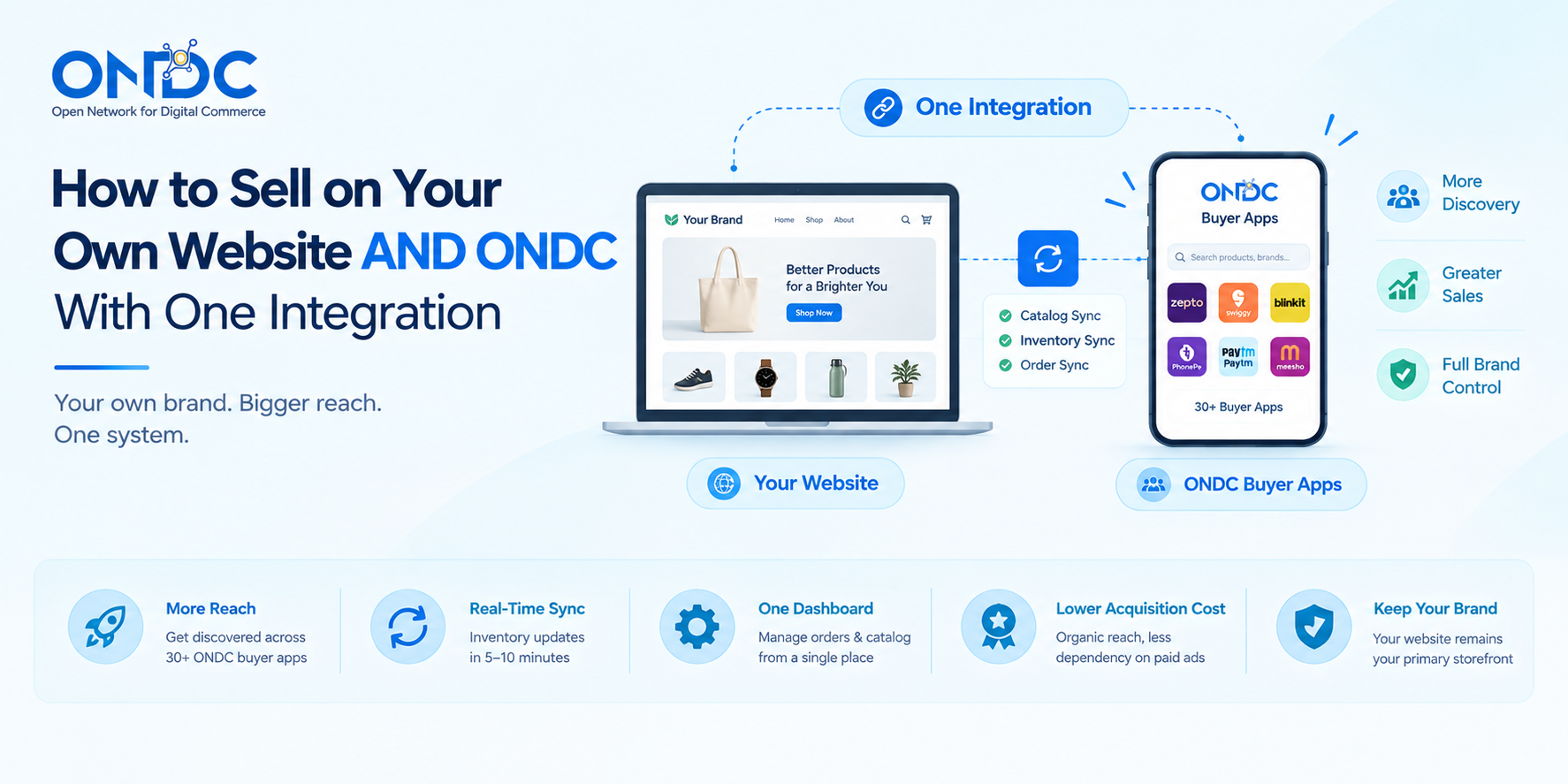
How to Sell on Your Own Website AND ONDC With One Integration
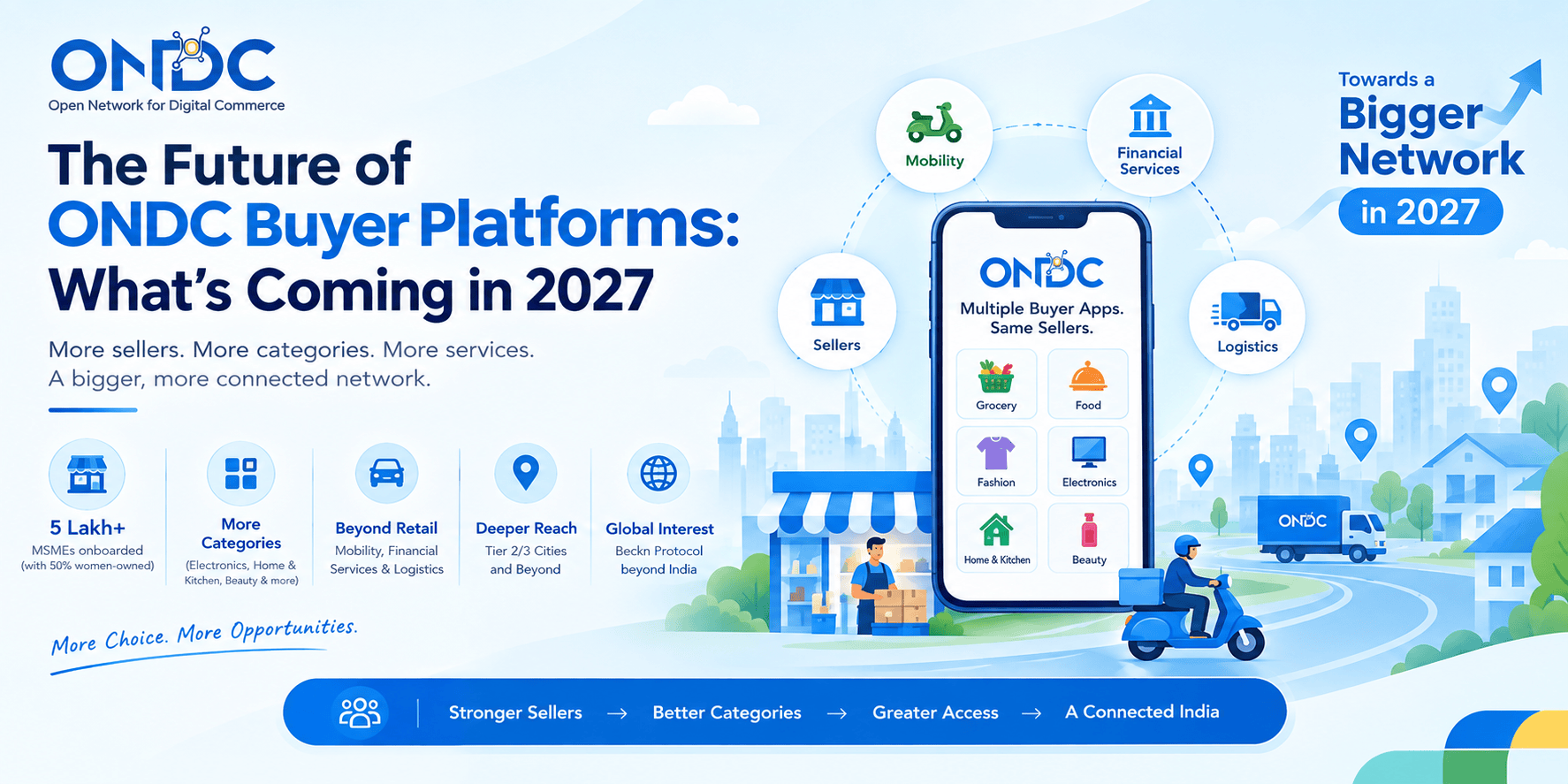
Future of ONDC Buyer Platforms: What's Coming in 2027
.png)
How Logistics & Delivery Partners Plug Into ONDC Buyer Platforms
.png)
Sounds like COSTBO might be the right choice for your business?
Get started by registering your business today! If you have any questions, we're here to help. Our team will reach out to you with detailed information about our offerings, product features, and a demo