

Building Blocks of ONDC: A Detailed Guide to India’s Open Digital Commerce Infrastructure
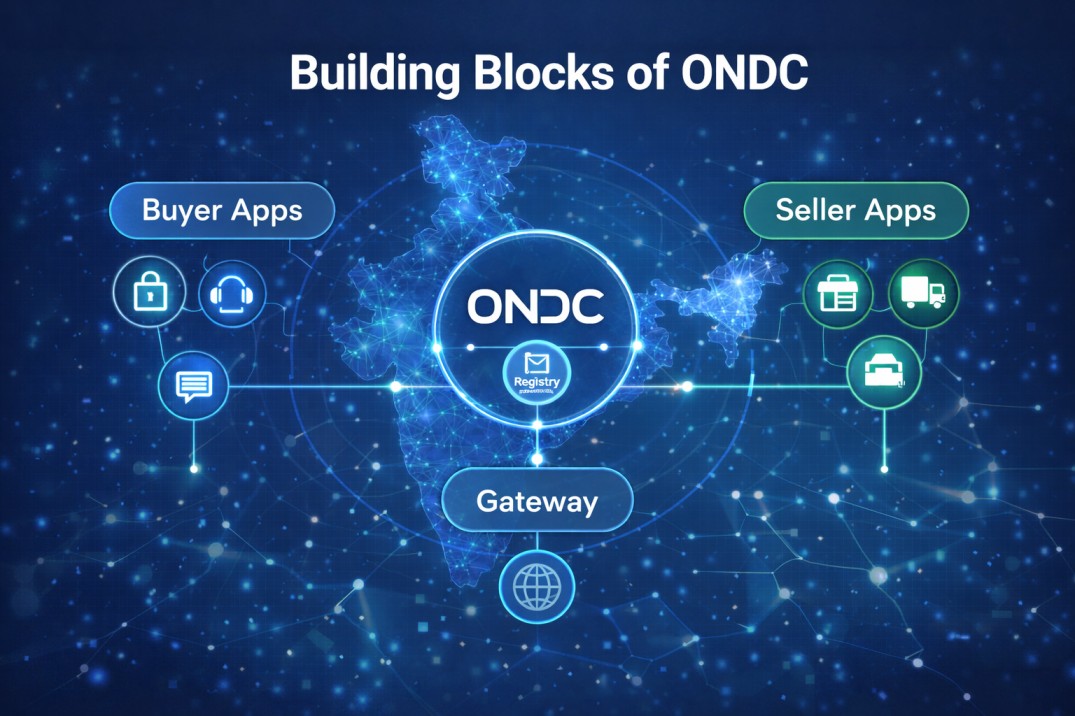
ONDC works, we must look at its core building blocks:Technology componentsNetwork participantsNetwork policiesData policy and privacy framework
India’s digital commerce ecosystem is undergoing a fundamental shift—from closed, platform-led marketplaces to an open, interoperable network model. At the center of this transformation is the Open Network for Digital Commerce (ONDC), which has moved rapidly from concept to nationwide execution.
As of the latest network data:
- Total orders placed: 83,864,322+
- Active seller base: 167,468 sellers
- Geographic coverage: 862 districts across India
- Highest-order state: Karnataka, leading the network in total transactions
These numbers highlight a critical reality: ONDC is no longer a pilot or policy experiment—it is a live, production-scale digital commerce network with deep penetration across states, cities, and districts.
To understand how ONDC works, we must look at its core building blocks:
- Technology components
- Network participants
- Network policies
- Data policy and privacy framework
1. Technology Components of ONDC
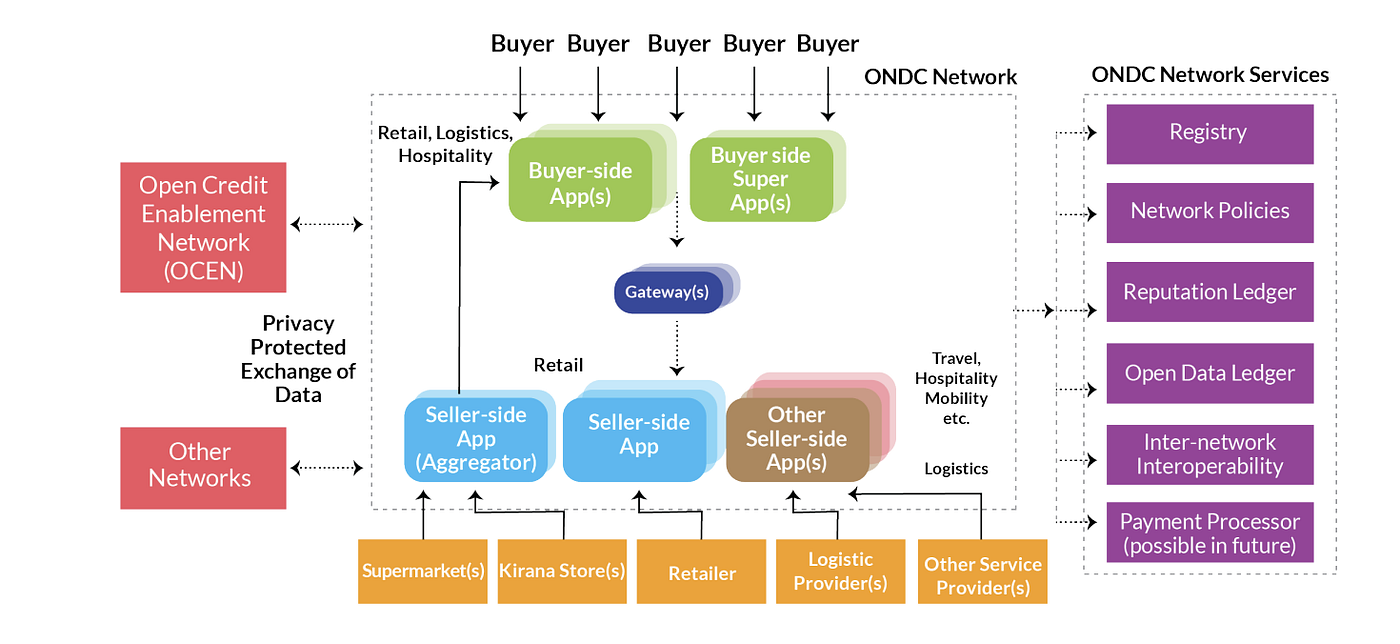
ONDC is built as a network of interoperable components, not a monolithic system.
Each component performs a specific role while remaining loosely coupled to the rest of the ecosystem.
1.1 Core Network Components
The ONDC technology stack includes:
- Registry
- Gateway
- Buyer-side applications
- Seller-side applications
- Adapter interfaces (APIs)
- Supporting services such as logistics, payments, and dispute mechanisms
Together, these components allow independent applications to discover, communicate, and transact with each other using common standards.
1.2 Adapter Interfaces (Open APIs)
Adapter interfaces are the foundation of ONDC interoperability.
These interfaces are built using the Beckn Protocol, an open-source specification that defines how commerce-related messages are exchanged across systems.
What these APIs enable
- Standardized transaction flows across apps
- Seamless communication between buyer apps, seller apps, and logistics providers
- Vendor-neutral integrations (no single company controls access)
Because these APIs are:
- Open
- Publicly documented
- Protocol-driven
Any technology provider can build an ONDC-compliant application, dramatically lowering entry barriers.
1.3 ONDC Gateway
The Gateway plays a critical discovery role in the network.
What the gateway does
- Receives search requests from buyer applications
- Multicasts those requests to all relevant seller applications
- Filters results based on location, availability, and buyer preferences
What the gateway does NOT do
- It does not rank sellers
- It does not own inventory
- It does not influence pricing
To accelerate adoption, ONDC initially enables gateway services via technology partners.
As transaction volumes grow, multiple independent gateways are expected to coexist—encouraging competition and resilience.
1.4 Open Registries
Open registries act as the trust layer of ONDC.
They maintain:
- Lists of registered network participants
- Network policies and rulebooks
- Metadata required for verification and compliance
Registries ensure that:
- Only verified participants interact on the network
- Policies are transparent and consistently applied
- The ecosystem remains open yet trustworthy
1.5 Buyer-Side and Seller-Side Applications
These are the applications people actually use.
Buyer-Side Applications (Demand Layer)
Buyer apps initiate transactions. They can take many forms:
- Consumer shopping apps
- Voice assistants
- Chatbots
- Assisted commerce interfaces
Their responsibilities include:
- Product and service discovery
- Checkout and payment initiation
- Order tracking and grievance handling
Seller-Side Applications (Supply Layer)
Seller apps enable businesses to participate in ONDC.
They manage:
- Seller onboarding and KYC
- Catalog and inventory management
- Order acceptance and fulfillment
- Logistics coordination and settlements
To boost early adoption, ONDC released reference buyer and seller applications, available as open source, allowing technology providers to build on them.
2. ONDC Network Participants (NPs)
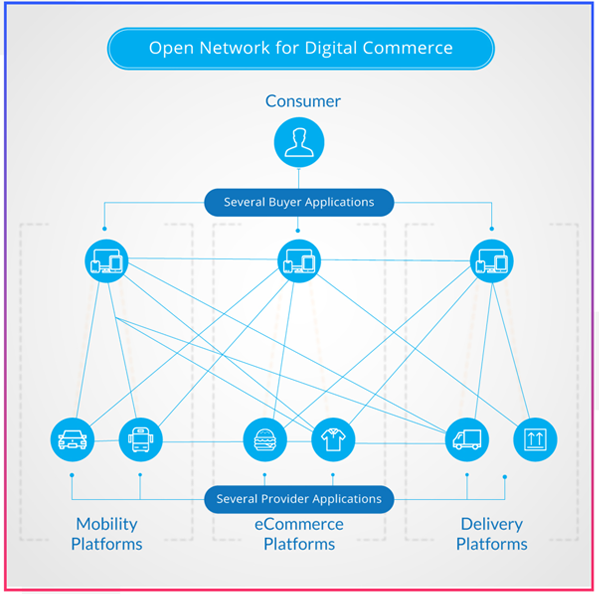
ONDC is a decentralized network, and its success depends on wide participation across sectors, sizes, and geographies.
2.1 Who Are Network Participants?
Network participants include entities from:
- Retail and e-commerce
- Logistics and last-mile delivery
- Food, hospitality, and mobility
- Services and emerging domains
They broadly fall into:
- Buyer-side participants
- Seller-side participants
- Gateway and service providers
2.2 Multi-Role Participation
A unique feature of ONDC is role flexibility.
A single network participant can:
- Act as a seller app in one domain (e.g., retail)
- Act as a buyer app in another (e.g., logistics)
This flexibility enables:
- Cross-domain innovation
- Optimized supply chains
- New business models not possible in closed marketplaces
2.3 Scale and Diversity of Participants
ONDC supports:
- Large digital platforms
- Small and medium startups
- Enterprises listing their own products
- White-labeled seller app providers
The unbundling of commerce creates opportunities for technology providers:
- White-label platforms can become ONDC-compliant
- Cost centers can become revenue centers
- Sellers gain access to new demand channels via ONDC buyer apps
2.4 Responsibilities of Network Participants
Depending on their role, participants are responsible for:
- Onboarding buyers and sellers
- Managing catalogs and inventory
- Handling the full order lifecycle
- Invoicing, reconciliation, and settlements
- Warehousing and logistics
- Customer support and returns
- Payment and refund management
ONDC defines the framework—but execution remains decentralized.
3. Network Policies
3.1 Minimal and Non-Restrictive Governance
ONDC adopts a minimalistic, non-restrictive policy framework to promote:
- Transparency
- Inclusivity
- Innovation
- Long-term sustainability
Policies cover areas such as:
- Registration and subscription
- Transaction and payment flows
- Data transmission and communication
- Runtime behavior and compliance
Wherever possible, these policies are:
- Machine-readable
- Technically enforceable
- Continuously updated as the network evolves
3.2 Dispute Resolution Framework
ONDC acts as a facilitator, not a central authority.
Dispute mechanisms are inspired by:
- Online Dispute Resolution (ODR) frameworks from NITI Aayog
- Financial sector guidelines issued by the Reserve Bank of India
The focus is on fairness, transparency, and scalability—without centralized control.
4. Data Policy and Privacy Framework
Data governance is one of ONDC’s most critical design principles.
4.1 Regulatory Compliance
ONDC’s data policy complies with:
- Information Technology Act, 2000
- Emerging personal data protection regulations in India
The framework balances:
- Privacy and consent
- Business practicality
- India’s evolving regulatory ecosystem
4.2 Core Principles of Data Privacy
ONDC follows these foundational principles:
- Digital commerce requires data exchange—but only what is necessary
- Transaction data resides only with buyer and seller applications
- ONDC does not store or view transaction-level data
- Data sharing is consent-based and purpose-limited
- Personally Identifiable Information (PII) is protected
- Competitive seller data is safeguarded from third parties
- Anonymized performance metrics may be shared for network health
4.3 Looking Ahead: Data Empowerment Architecture
With India’s Data Empowerment and Protection Architecture (DEPA) initiatives, ONDC aims to:
- Strengthen user control over data
- Enable secure, consent-driven data sharing
- Set global benchmarks for open digital commerce privacy
Final Summary
ONDC is not just a commerce initiative—it is national digital infrastructure.
By separating discovery, transaction, and fulfillment:
- Sellers gain freedom from marketplace lock-in
- Buyers gain transparency and choice
- Technology providers gain room to innovate
- India gains a resilient, open commerce ecosystem
As ONDC scales, understanding these building blocks becomes essential for sellers, platforms, policymakers, and developers alike.
Frequently Asked Questions (FAQs): Building Blocks of ONDC
1. What are the building blocks of ONDC?
The building blocks of ONDC include technology components, network participants, network policies, and data governance frameworks. Together, they enable open, interoperable digital commerce without platform lock-in.
2. How is ONDC different from traditional e-commerce marketplaces?
Unlike traditional marketplaces that control discovery, pricing, and seller access, Open Network for Digital Commerce separates these roles across multiple independent applications. Buyers and sellers interact through open standards instead of a single platform.
3. What role does the ONDC Gateway play?
The ONDC Gateway enables product and service discovery by broadcasting buyer search requests to all relevant seller apps. It does not rank sellers, control inventory, or influence pricing—ensuring neutral discovery.
4. Who can become a network participant on ONDC?
Any compliant entity can become a network participant, including:
- Buyer app providers
- Seller app providers
- Logistics and payment service providers
- Technology platforms and aggregators
Participants can also play multiple roles within the network.
5. Does ONDC store transaction or customer data?
No. ONDC does not store or view transaction-level data. Transaction data remains only with the buyer and seller applications, following consent-based and purpose-limited data-sharing principles.
6. What protocol does ONDC use for interoperability?
ONDC uses open APIs based on the Beckn Protocol, which enables standardized, interoperable communication between different commerce applications across the network.
7. How does ONDC ensure trust without a central marketplace?
Trust is established through:
- Open registries of verified participants
- Transparent network policies
- Standardized technical compliance
- Facilitated dispute resolution mechanisms
This allows decentralization without compromising reliability.
8. Can ONDC scale nationally across states and districts?
Yes. ONDC is already live across 800+ districts, with 80M+ orders placed and strong adoption in multiple states. Its decentralized architecture is specifically designed for national-scale growth.
9. How do network policies impact sellers and platforms?
Network policies define rules of engagement—covering registration, transactions, payments, data exchange, and conduct. They are minimal, non-restrictive, and designed to evolve with the ecosystem.
10. Why are the building blocks of ONDC important to understand?
Understanding ONDC’s building blocks helps businesses and platforms:
- Choose the right role in the ecosystem
- Build compliant, future-ready solutions
- Avoid dependency on closed marketplaces
- Participate effectively in India’s open digital commerce future
References
- Open Network for Digital Commerce (ONDC) – Official Website
https://ondc.org - DPIIT – Government of India (ONDC Initiative)
https://dpiit.gov.in
Policy framework and ONDC governance
About Costbo
Founded by Mr. Eswar and Mr. Ananth, with nearly 20 years of technology experience, Costbo is a leading ONDC seller platform powering India’s open digital commerce ecosystem. Costbo is among the first ONDC 1.2.0 certified seller platforms, enabling brands and sellers to sell on ONDC with fast onboarding, lower costs, and full operational control.
Ready to grow on ONDC? Start your journey with Costbo today.
Read More
- ONDC A Revolutionary Open eCommerce Network – in Action
- Roles of Seller App & Buyer App on ONDC Network
- Why Sell Online Through the ONDC Network?
- Getting Started as a Seller on ONDC: Registration Options
- Which Is the Best ONDC Seller App? Features, Pros & Cons (2026)
- Best ONDC Buyer Apps in 2026: Features, Pros & Cons
Related post
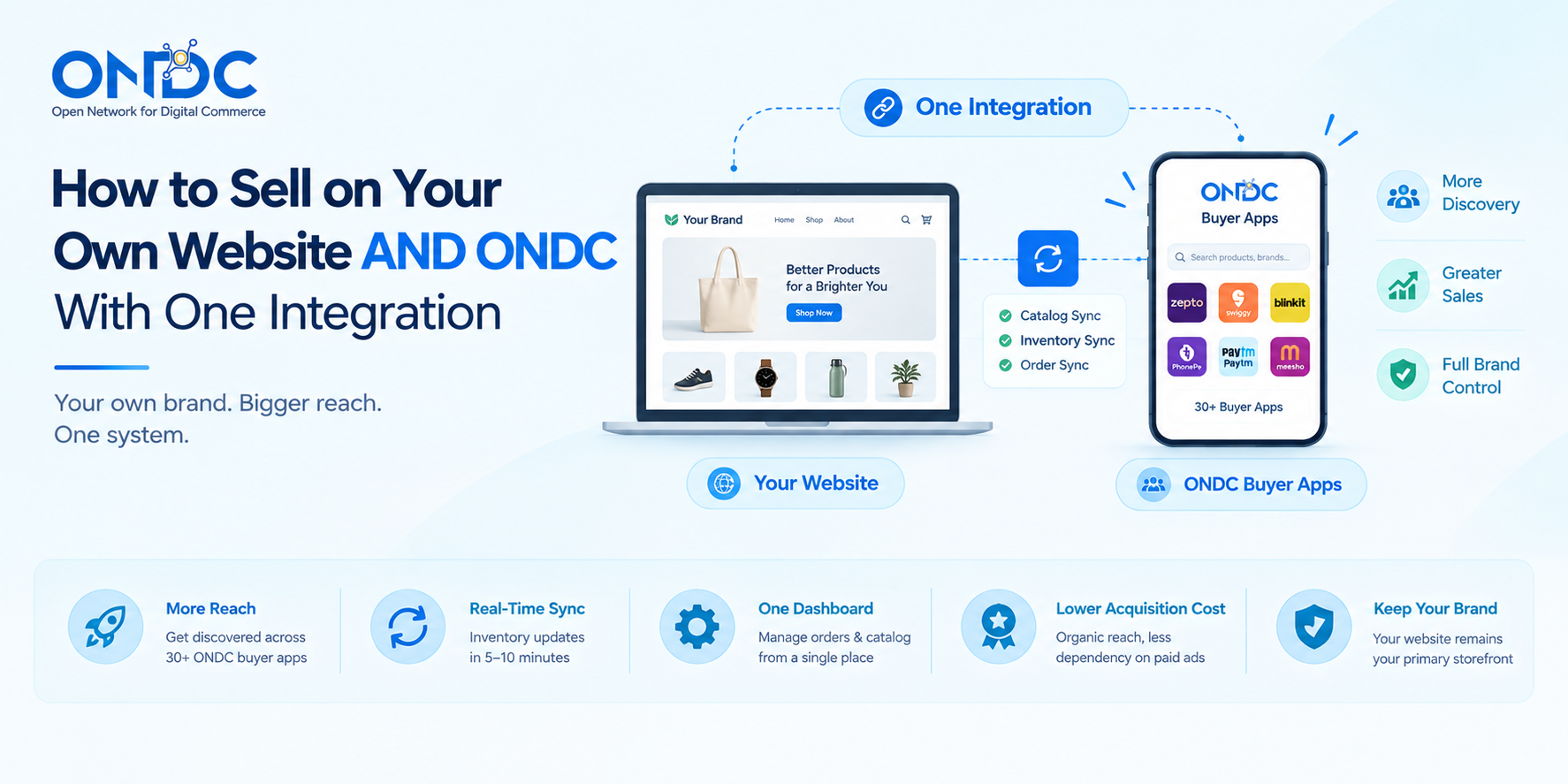
How to Sell on Your Own Website AND ONDC With One Integration
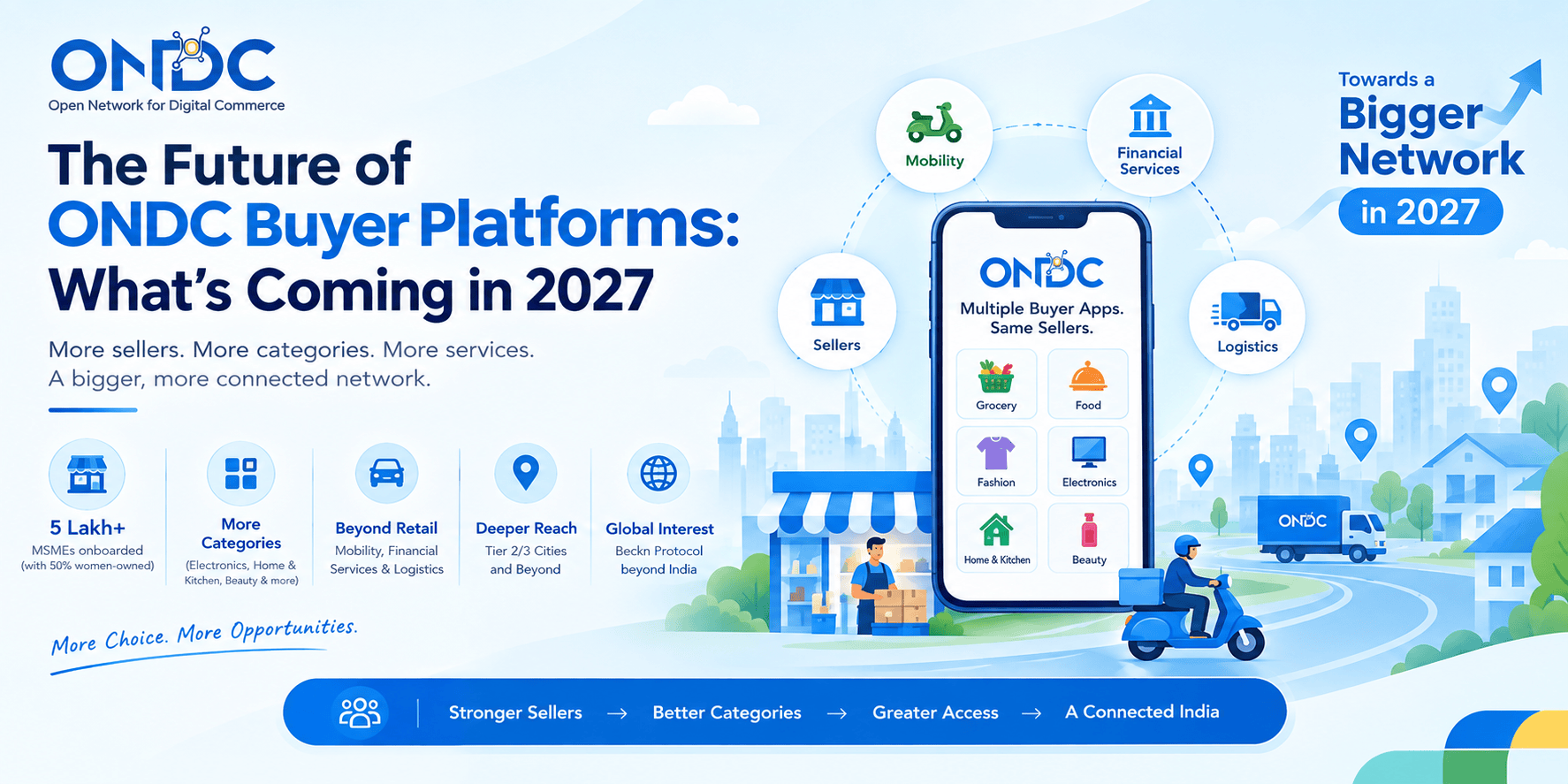
Future of ONDC Buyer Platforms: What's Coming in 2027
.png)
How Logistics & Delivery Partners Plug Into ONDC Buyer Platforms
.png)
Sounds like COSTBO might be the right choice for your business?
Get started by registering your business today! If you have any questions, we're here to help. Our team will reach out to you with detailed information about our offerings, product features, and a demo