

How Do ONDC Seller Platforms Handle Payments and Settlements?
How do ONDC seller platforms handle payments and settlements? Explore payment flow, settlement cycles, payment collectors, and payout systems in ONDC.
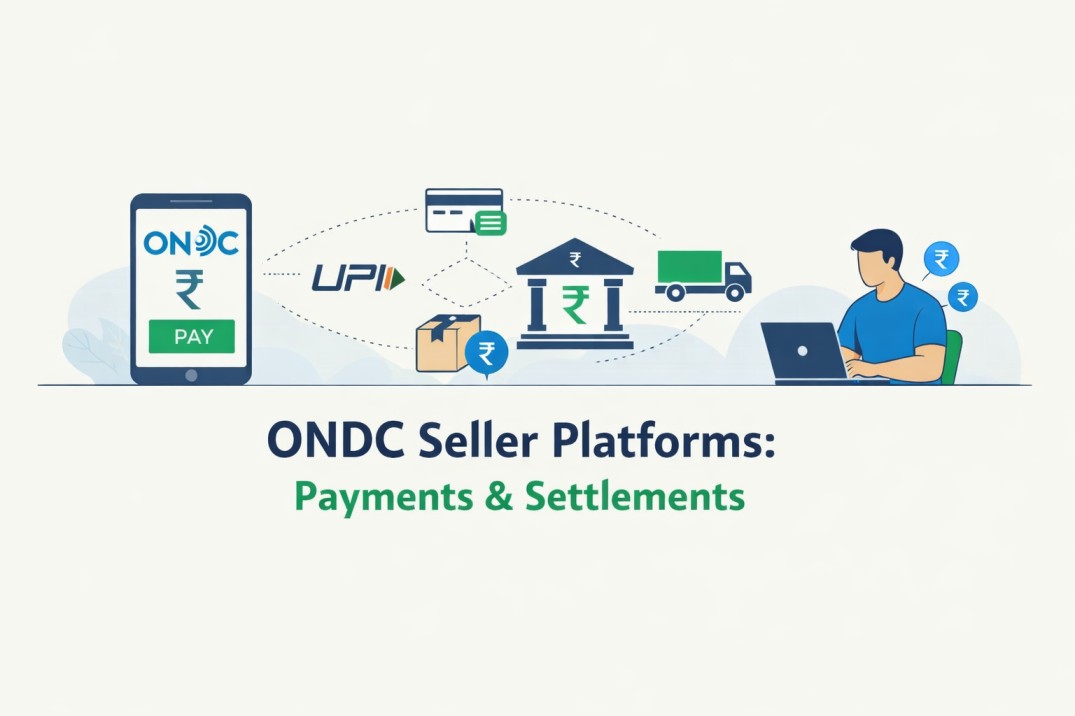
India’s digital commerce ecosystem is evolving rapidly with the launch of the Open Network for Digital Commerce (ONDC). Designed to democratize e-commerce, ONDC allows buyers and sellers to transact across multiple platforms without being restricted to a single marketplace.
According to data released by the Government of India and ONDC network updates:
- ONDC has expanded to 1200+ cities across India.
- The network has recorded millions of transactions per month across categories like retail, food, and mobility.
- India’s digital payment ecosystem is also booming, with UPI crossing 12–14 billion transactions per month according to NPCI data.
- The government estimates that India’s e-commerce market could reach $200 billion by 2027, and open networks like ONDC are expected to play a major role in this growth.
To support this scale, ONDC has created a structured and interoperable payment framework that ensures secure transactions, transparent settlements, and faster payouts for sellers using an ONDC seller platform or ONDC seller app.
1. Payment Flow in the ONDC Ecosystem
Unlike traditional marketplaces where a single platform controls payments, ONDC uses a network-based payment architecture.
The standard payment flow typically follows these steps:
- A customer places an order through an ONDC buyer app (such as Paytm, PhonePe, or Mystore).
- The order request is transmitted through the ONDC network protocol to different seller platforms.
- A seller registered on an ONDC seller platform confirms the order.
- The buyer completes the payment using available payment methods.
- The payment is processed through an integrated payment gateway or payment collector.
- After order confirmation and delivery, the funds are settled to the seller based on predefined settlement rules.
This architecture ensures secure, standardized, and transparent payment processing across the network.
2. Payment Methods Supported on ONDC
ONDC seller platforms support multiple digital payment methods to ensure accessibility for customers across India.
Common payment methods include:
- UPI (Unified Payments Interface)
- Credit Cards
- Debit Cards
- Net Banking
- Digital Wallets
- Cash on Delivery (COD) (supported by selected logistics partners)
UPI dominates digital commerce payments in India. As per NPCI statistics, UPI contributes to more than 70% of India’s digital transactions, making it the most popular payment method across ONDC-enabled platforms.
3. Role of Payment Collectors in ONDC
ONDC introduces a unique role called the Payment Collector.
A payment collector is responsible for receiving payments from buyers and distributing funds to the relevant stakeholders involved in the transaction.
The payment collector may be:
- The buyer application
- The seller application
- A third-party payment gateway
Key responsibilities of the payment collector include:
- Collecting payment from customers
- Splitting the payment among sellers, logistics providers, and platforms
- Ensuring compliance with ONDC transaction protocols
- Initiating settlements to sellers
This approach ensures that payments are automatically distributed to all participants in the order lifecycle.
4. Settlement Process for Sellers
Settlement refers to the transfer of funds to the seller after the order is successfully completed.
The typical settlement process includes the following stages.
Step 1: Order Completion
Once the order is delivered successfully, the transaction becomes eligible for settlement.
Step 2: Payment Reconciliation
The payment collector reconciles all payment details including:
- Order value
- Seller commission
- Logistics charges
- Payment gateway charges
- Applicable taxes
Step 3: Payment Split
Funds are divided among all stakeholders:
- Seller receives product revenue
- Logistics provider receives delivery charges
- Platforms receive service fees
Step 4: Final Settlement
The remaining balance is transferred to the seller’s bank account.
5. Settlement Cycle on ONDC Seller Apps
Settlement timelines depend on the ONDC seller platform and payment gateway integration.
Typical settlement timelines include:
Settlement TypeTimelineInstant settlementSame day or within a few hoursStandard settlementT+1 or T+2 daysCOD settlementAfter delivery confirmation
Compared to traditional marketplaces where settlements may take 7–14 days, many ONDC seller apps offer faster payouts, helping sellers improve working capital and cash flow.
6. Payment Reconciliation and Transparency
One of the advantages of ONDC is transparent financial tracking for sellers.
Seller dashboards on ONDC platforms provide:
- Order-level payment breakdown
- Settlement reports
- Platform commission details
- Payment gateway fees
- Pending settlements
This transparency allows businesses to track revenue accurately and avoid payment disputes.
7. Handling Refunds and Cancellations
Refunds and cancellations are also managed through the ONDC payment system.
The process generally works as follows:
- Customer raises a cancellation or return request.
- Seller reviews and approves the request according to policy.
- The payment collector initiates the refund process.
- The refunded amount is credited to the customer’s original payment method.
Refund processing usually takes 3–7 working days, depending on the payment method used.
8. Compliance and Security Standards
ONDC follows strict financial and security guidelines to ensure safe transactions.
These include:
- RBI payment regulations
- PCI-DSS standards for card payments
- UPI security protocols
- Encrypted data transmission
Because ONDC is a government-supported initiative, the payment infrastructure is designed to maintain high levels of security, transparency, and compliance.
Conclusion
The ONDC payment and settlement infrastructure is designed to support a decentralized and transparent e-commerce ecosystem. By separating buyer platforms, seller platforms, logistics providers, and payment collectors, ONDC ensures that transactions remain secure while enabling faster and fair settlements.
For sellers using an ONDC seller platform or ONDC seller app, this system provides significant advantages such as faster payouts, better financial visibility, and access to a rapidly expanding digital commerce network across India.
As ONDC continues to grow across 1200+ cities, its payment framework will play a crucial role in enabling small businesses, brands, and retailers to participate in India’s next phase of digital commerce.
About Costbo
Costbo is an emerging ONDC seller platform designed to help businesses easily connect with the ONDC network and start selling across multiple buyer applications.
With Costbo, sellers can:
- Quickly onboard to the ONDC ecosystem
- Manage product catalogs and orders
- Access payment tracking and settlement reports
- Reach customers across multiple ONDC buyer apps
Costbo aims to simplify digital commerce for sellers by providing a user-friendly ONDC seller app and platform infrastructure.
Frequently Asked Questions (FAQ)
1. How do sellers receive payments on ONDC?
Sellers receive payments through the settlement system managed by the payment collector. After order completion and reconciliation, funds are transferred to the seller’s bank account.
2. How long does settlement take on ONDC seller platforms?
Settlement timelines vary by platform but usually range from same-day settlements to T+1 or T+2 days depending on payment gateway integrations.
3. What payment methods are supported on ONDC?
ONDC supports multiple payment options including UPI, debit cards, credit cards, net banking, digital wallets, and cash on delivery (COD).
4. Who manages payment distribution on ONDC?
Payments are managed by a payment collector, which can be a buyer app, seller app, or payment gateway responsible for distributing funds to sellers and other stakeholders.
5. Is ONDC payment infrastructure secure?
Yes. ONDC payments follow RBI regulations, PCI-DSS standards, and encrypted transaction protocols, ensuring safe and reliable digital transactions.
References
- ONDC Official Network Documentation
https://www.commerce.gov.in/- NPCI (National Payments Corporation of India) – UPI Transaction Data
- India Brand Equity Foundation (IBEF) – Indian E-commerce Market Reports
- ONDC Network Updates and Public Data Releases
Related post
.png)
.png)
How Multiple Buyer Apps Access the Same Sellers on ONDC (Network Effect Explained Simply)
.png)
ONDC Buyer App vs Amazon/Flipkart App: What's Actually Different for Shoppers
ONDC Discounts & Offers: How Buyers Save More Than on Traditional Marketplaces
Sounds like COSTBO might be the right choice for your business?
Get started by registering your business today! If you have any questions, we're here to help. Our team will reach out to you with detailed information about our offerings, product features, and a demo