

Top ONDC Network Buyer Apps to Use in 2026
Looking for the best ONDC buyer apps in 2026? Discover the top 10 ONDC network apps for groceries, food, fashion, electronics, and more. Compare features, benefits, and learn why Costbo is a leading choice for ONDC shopping
.png)
The Open Network for Digital Commerce set out to do for online shopping what UPI did for payments — and two years on, that bet is paying off. What started as a government-backed pilot in a handful of cities has turned into a genuine alternative to the closed marketplaces that used to run Indian e-commerce. More categories, more sellers, and more buyer apps have joined the network since 2024, and the experience of shopping on ONDC has matured a lot along the way.
If you tried an ONDC buyer app acouple of years ago and found it patchy, it's worth another look. Catalogs aredeeper, checkout is smoother, and delivery timelines from hyperlocal sellershave improved across most categories. Here's an updated, category-wise roundupof the buyer apps worth having on your phone in 2026.
Table of Contents
• TheGrowth of ONDC Network in Numbers
• How ONDC Buyer Apps Work
• Top ONDC Buyer Apps by Category
◦ Grocery& Daily Essentials
◦ Food& Beverages
◦ Mobility
◦ Fashion, Electronics, Beauty, Health & Auto
• Pickingthe Right App for You
• Conclusion
The Growth of ONDC Network in Numbers
Back in 2024, ONDC was still apromising experiment finding its footing. Heading into 2026, it looks a lotmore like standing infrastructure. A few numbers tell that story:
• The network now counts more than 3 lakh registered sellers and over 100 live buyer apps built on top of it — a sign the ecosystem has broadened well past itsearly handful of participants.
• Citycoverage has scaled alongside it. Some 2026 trackers put ONDC's footprint at400+ cities and towns, while others cite figures closer to 800+ cities,depending on how "active" presence is measured.
• Thelast widely cited transaction checkpoint had ONDC crossing roughly 14 millionmonthly transactions, with vendor counts passing 370,000 registered sellersaround the same period — and both numbers have kept climbing since, as thenetwork expanded beyond retail into financial services, logistics, andmobility.
• It'stelling that "top ONDC buyer apps" roundups are now a recurring genreof content published specifically for 2026 — two years ago, this wasn't even acategory people were writing about.
Source: ONDC ecosystem trackers and industry coverage, 2025–2026
ONDC doesn't publish a singlereal-time public dashboard the way a private marketplace might, so exactfigures vary a little depending on the source and the month — treat these asdirectional rather than exact. But the trend line is unmistakable: more sellers,more cities, more categories, and a growing field of buyer apps competing foryour attention on the network.
How ONDC Buyer Apps Actually Work
ONDC isn't a marketplace itself —it's the plumbing underneath one. Every buyer app you install taps into thesame open network of registered sellers, so in theory, the products you candiscover don't change much from app to app. What does change is theexperience: how the catalog is organized, how fast checkout is, whetherhyperlocal sellers near you are surfaced first, and what extra tools(wishlists, order tracking, multi-seller carts) the app layers on top.
In short:
• One appgives you access to sellers listed across the entire network, not just sellerswho signed up with that specific brand
• You cancompare prices and delivery times across multiple sellers for the same product
• BecauseONDC is hyperlocal-first, nearby sellers tend to rank higher, which usuallymeans faster delivery
• Gettingstarted is as simple as: download the app → sign up → set your location →start browsing
The app you pick doesn't lock you outof anything — but a well-built one makes the difference between browsing andactually finishing your order without frustration.
Top ONDC Network Buyer Apps by Category (2026 Edition)
Grocery & Daily Essentials
Grocery is still the backbone of ONDC's retail volume, and it's also where the gap between a decent buyer appand a great one shows up fastest — nobody wants a laggy app when they're tryingto reorder milk and atta before 9 am.
1. DigiHaat
Bharat-Focused ONDC Buyer App
DigiHaat is one of the most visible Bharat-focused ONDC buyer apps, designed to promote local sellers, artisans, and MSMEs.
Pros:
✅ Strong adoption in Tier-2 & Tier-3 cities
✅ Focus on local & regional sellers
✅ Government-aligned Bharat commerce vision
Cons:
⚠️ Limited premium brand presence
⚠️ UX still evolving compared to private marketplaces
2. HamaraMal
HamaraMal focuses on hyperlocal and neighbourhood commerce, connecting nearby sellers with local buyers.
Pros:
✅ Good for local discovery
✅ Supports neighbourhood merchants
Cons:
⚠️ Limited scale beyond select regions
⚠️ Lower order volumes than top buyer apps
3. Bajaj Markets
Bajaj Markets integrates ONDC into its fintech-led marketplace, enabling product discovery with financing and EMI options.
Pros:
✅ Strong brand trust
✅ Financing & EMI integration
✅ Good for electronics & appliances
Cons:
⚠️ Category-limited focus
⚠️ Less hyperlocal depth
4. Airpay
Airpay participates in ONDC primarily through payments and assisted commerce buyer flows, often embedded within enterprise or assisted journeys.
Pros:
✅ Strong payments backbone
✅ Useful in assisted buying scenarios
Cons:
⚠️ Not a consumer-first shopping app
⚠️ Limited discovery experience
9. NStore
NStore focuses on store-led discovery, allowing buyers to shop directly from nearby physical stores.
Pros:
✅ Strong local retail connect
✅ Offline-to-online experience
Cons:
⚠️ Limited national scale
⚠️ Smaller seller base
Food & Beverages
Food delivery on ONDC has keptchipping away at the assumption that you need a single dominant app to get ameal delivered.
1. Tata Neu
Tata Neu has continued to expand itsrestaurant network on ONDC, pulling in both known chains and smaller localeateries that never had listings on the bigger delivery apps. Backed by Tata'slogistics reach, it remains one of the more dependable options for fooddelivery through the network.
2. Ola
Ola's food delivery push through ONDC has matured since its early rollout, giving users another route to order from local restaurants at competitive pricing, especially in cities where Ola'sride-hailing base is already strong.
3. PhonePe (Pincode)
Ponape's ONDC-linked commerce layer has grown into a genuine multi-category option, with food and beverage listingsalongside grocery and other essentials, riding on PhonePe's massive existinguser base.
Mobility
1. Namma Yatri
Namma Yatri remains the standout mobility story on ONDC — a driver-owned model where the full fare goes to the driver, with the app charging a flat, transparent fee instead of a cut of every ride. It has continued expanding beyond its Bengaluru roots into more cities.
2. Yaary
Yaary keeps pushing the same driver-first economics, passing commission savings on to riders in the form of lower fares compared to traditional aggregator apps.
Fashion, Electronics, Beauty, Health & Auto Components
As ONDC's non-grocery categories have matured, a handful of buyer apps have built out genuinely deep catalogs beyond their original niche:
• Fashion — Snapdeal and Paytm continue to carry meaningful volume for apparel, footwear, and accessories on the network.
• Electronics — Paytm and a growing set of regional players list appliances, mobiles, and accessories from sellers who previously had limited online reach.
• Beauty& Personal Care— Otipy and nStore have both expanded well past grocery into skincare, haircare, and personal care essentials.
• Health& Wellness —Apps like Pincode have onboarded pharmacies and wellness sellers, making medicines and health supplements easier to find through ONDC.
• Auto Components —Coverage here is thinner network-wide, but it's steadily growing as more auto parts sellers register.
Picking the Right ONDC Buyer App for You
Since the underlying catalog is shared across the network, the real decision comes down to how each app handls your specific shopping habits:
• Shopping mostly for groceries, D2C brands, and household essentials?
Costbo is worth starting with — it's built around exactly that use case, with a brand-forward catalog, quick checkout, and reliable order tracking.
• Ordering food regularly?
Tata Neu or Ola are strong picks depending on what's available in your city.
• Need daily commute rides?
Namma Yatri or Yaary give you the driver-first pricing model.
• Buying across categories (fashion, electronics, beauty)?
A broader app like Paytm covers more ground in one place.
There's no wrong choice technically —but the right app saves you time, and that's really what matters when you' reordering essentials on a Tuesday evening.
Conclusion
Two years into its journey from ambitious pilot to daily-use infrastructure, ONDC has proven the core idea: buyers don't need a handful of giant, closed marketplaces to get a good online shopping experience — they need an open network and a buyer app that gets out of the way and lets them shop. Whether you're stocking your kitchen, ordering dinner, or booking a ride, there's a buyer app on the network built for exactly that job.
For everyday grocery and D2C brand shopping in particular, Costbo has become one of the more reliable places to start — a focused catalog, a fast checkout, and a network of brands and sellers built around how people actually shop for essentials.
Give ONDC a try in 2026 — the network, and the apps built on it, have come a long way.
About Costbo
Founded by Mr. Eswar and Mr. Ananth, with nearly 20 years of technology experience, Costbo is a leading ONDC seller platform powering India’s open digital commerce ecosystem. Costbo is among the first ONDC 1.2.0 certified seller platforms, enabling brands and sellers to sell on ONDC with fast onboarding, lower costs, and full operational control.
Ready to grow on ONDC? Start your journey with Costbo today.
Related post
.png)
.png)
How Multiple Buyer Apps Access the Same Sellers on ONDC (Network Effect Explained Simply)
.png)
ONDC Buyer App vs Amazon/Flipkart App: What's Actually Different for Shoppers
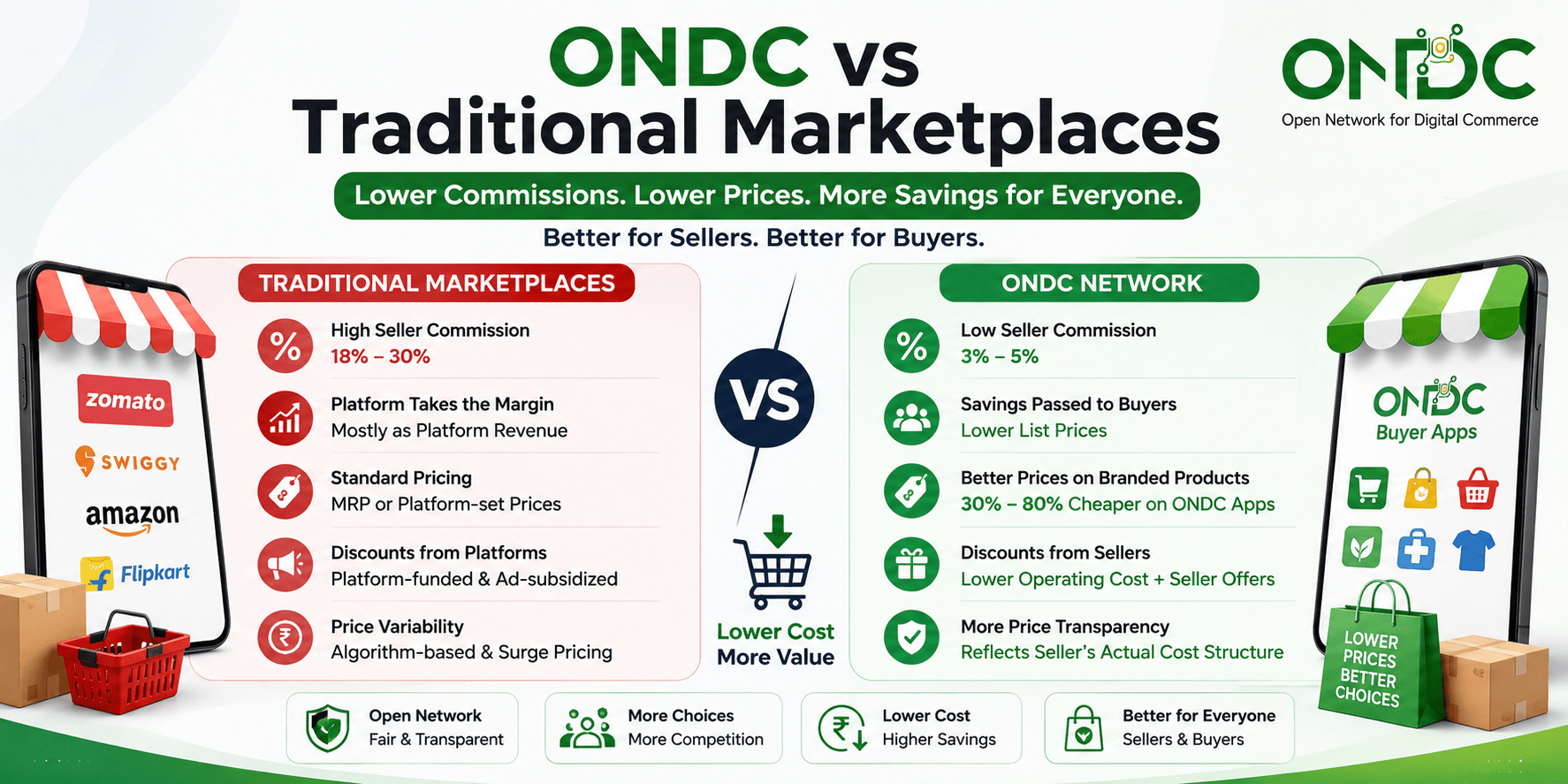
ONDC Discounts & Offers: How Buyers Save More Than on Traditional Marketplaces
Sounds like COSTBO might be the right choice for your business?
Get started by registering your business today! If you have any questions, we're here to help. Our team will reach out to you with detailed information about our offerings, product features, and a demo