

How D2C Brands Can Onboard and Scale Using ONDC (Complete 2026 Guide)
Learn how D2C brands can onboard and scale using ONDC with lower commissions, better margins, and multi-app reach. Step-by-step guide with strategies and insights.

India’s digital commerce ecosystem is entering a new phase with the rise of Open Network for Digital Commerce (ONDC), a government-backed initiative designed to democratize e-commerce.
Key Data Points (2025–2026)
- ONDC has crossed 6.5+ lakh sellers and service providers
- Monthly orders have reached 12–15 million transactions
- Active in 600+ cities across India
- Fastest-growing categories:
- Grocery (40%+ share)
- Food delivery (30%+ share)
- Fashion and D2C brands (rapid growth stage)
In parallel:
- India’s D2C market is projected to reach $100B by 2027
- Over 800+ funded D2C brands are competing for consumer attention
This creates a strong opportunity:
D2C brands can leverage ONDC to reduce costs, improve margins, and scale without heavy marketplace dependency.
How D2C Brands Can Onboard on ONDC
1. Choose the Right Seller App
ONDC operates through seller-side applications rather than a single platform.
Options include:
- SaaS-based seller apps
- ERP-integrated solutions
- Full-stack ONDC enablers
Selection criteria:
- Catalog size compatibility
- Logistics integration
- Ease of use
- Pricing model
2. Complete Seller Registration
Required documents:
- GSTIN
- PAN
- Bank account
- Brand details
- Product catalog
Typical timeline:
- KYC approval: 1–2 days
- Catalog setup: 1–3 days
- Go live: 3–7 days
This is often faster compared to onboarding on Amazon and Flipkart.
3. Product Catalog Optimization
ONDC works as a distributed discovery system across apps.
Best practices:
- Use keyword-rich product titles
- Add structured attributes
- Maintain high-quality images
- Keep pricing competitive
Well-optimized listings behave like SEO assets across buyer platforms.
4. Logistics and Fulfillment Setup
ONDC supports:
- Hyperlocal delivery
- Intercity shipping
Recommended approach:
- Start with hyperlocal delivery for faster growth
- Expand to national shipping gradually
How D2C Brands Can Scale on ONDC
1. Multi-App Distribution Advantage
A single product listing can appear across multiple buyer applications.
Benefits:
- Wider reach
- Increased discoverability
- Higher conversion potential
2. Pricing Strategy
ONDC is highly price-transparent.
Effective strategies:
- Keep prices 5–15% lower than traditional marketplaces
- Offer bundles and combos
- Use location-based pricing
3. Hyperlocal Growth Model
Starting with a focused geography offers:
- Faster delivery
- Lower logistics costs
- Better customer experience
Brands that succeed locally tend to scale faster nationally.
4. Performance Marketing Integration
Traffic sources:
- Meta Ads
- Google Ads
- Influencer campaigns
Redirect users to ONDC-enabled buyer apps.
Outcome:
- Lower customer acquisition cost
- Improved conversion rates
5. Retention Strategy
ONDC enables stronger brand recall compared to marketplaces.
Tactics:
- Packaging inserts with QR codes
- WhatsApp engagement funnels
- Loyalty and repeat purchase incentives
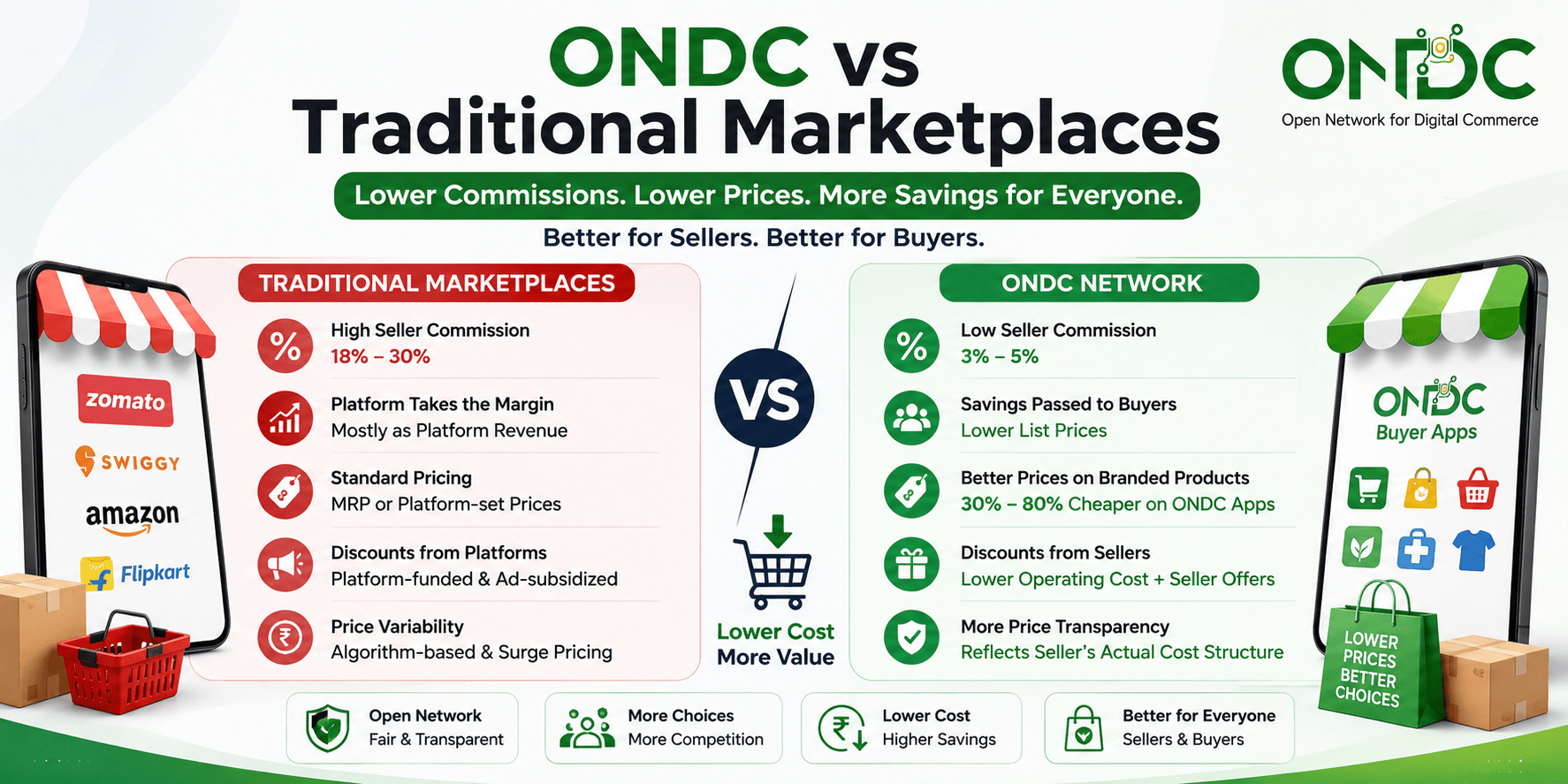
Unit Economics Comparison
Challenges to Consider
- Discovery systems are still evolving
- Dependence on seller apps
- Requires strong operational discipline
However, early adopters benefit from relatively lower competition.
Advanced Scaling Strategies
First-Mover Advantage
Early-stage sellers gain higher visibility and lower competition.
Category Domination
Focus on a specific category and geography to build leadership.
Data-Led Optimization
Track:
- Conversion rate
- Pricing competitiveness
- Delivery timelines
Optimize continuously.
ONDC-First Approach
Treat ONDC as a primary growth channel rather than a secondary one.
Future Outlook
ONDC is expected to:
- Reduce marketplace dependency
- Enable D2C and MSME growth
- Build an open commerce ecosystem in India
Early adoption can provide a strong long-term advantage.
Conclusion
ONDC represents a structural shift in India’s e-commerce model. It enables D2C brands to operate with better margins, broader reach, and greater control over pricing and customer experience.
Brands that invest early in ONDC can build a strong competitive edge as the ecosystem matures.
FAQs
1. What makes ONDC different from traditional marketplaces?
Unlike Amazon and Flipkart, ONDC is an open network. Sellers are not tied to a single platform and can reach customers across multiple buyer apps, reducing dependency and increasing flexibility.
2. What are the typical costs involved in selling on ONDC?
Costs include:
- Seller app subscription (₹0–₹5,000/month)
- Network commission (~3–10%)
- Logistics charges
Overall, this is significantly lower than marketplace commissions.
3. How long does onboarding take?
Most sellers can go live within 3–7 days, depending on catalog readiness and verification speed.
4. Can new D2C brands succeed on ONDC?
Yes. Lower competition and better pricing flexibility make ONDC suitable for new brands to launch and scale.
5. How do customers discover products on ONDC?
Products are discovered via buyer apps through:
- Search
- Categories
- Price comparison
Optimized listings improve visibility.
6. Which categories perform best?
- Grocery and packaged food
- Personal care
- Fashion
- Home essentials
Categories with repeat purchase behavior perform especially well.
7. Is ONDC suitable for premium brands?
Yes. Premium brands should focus on:
- Strong branding
- Value-based bundles
- Consistent pricing
8. What are common mistakes brands make?
- Poor product listings
- Incorrect pricing
- Weak logistics setup
- Treating ONDC as a secondary channel
9. How can brands scale faster on ONDC?
- Start hyperlocal
- Optimize pricing
- Invest in performance marketing
- Focus on repeat customers
10. Is ONDC the future of e-commerce in India?
ONDC is expected to become a major parallel ecosystem alongside marketplaces, enabling more open and competitive digital commerce.
References
- ONDC Official Website: https://ondc.org
- DPIIT ONDC Page: https://dpiit.gov.in/ondc
- Industry insights:
- RedSeer Consulting (e-commerce projections)
- Invest India (D2C growth data)
- Public ONDC dashboard
Read More
- Building Blocks of ONDC: A Detailed Guide to India’s Open Digital Commerce Infrastructure
- ONDC A Revolutionary Open eCommerce Network – in Action
- Roles of Seller App & Buyer App on ONDC Network
- Why Sell Online Through the ONDC Network?
- Getting Started as a Seller on ONDC: Registration Options
- Which Is the Best ONDC Seller App? Features, Pros & Cons (2026)
- Best ONDC Buyer Apps in 2026: Features, Pros & Cons
About Costbo
Founded by Mr. Eswar and Mr. Ananth, with nearly 20 years of technology experience, Costbo is a leading ONDC seller platform powering India’s open digital commerce ecosystem. Costbo is among the first ONDC 1.2.0 certified seller platforms, enabling brands and sellers to sell on ONDC with fast onboarding, lower costs, and full operational control.
Ready to grow on ONDC? Start your journey with Costbo today.
Read More
- Building Blocks of ONDC: A Detailed Guide to India’s Open Digital Commerce Infrastructure
- ONDC A Revolutionary Open eCommerce Network – in Action
- Roles of Seller App & Buyer App on ONDC Network
- Why Sell Online Through the ONDC Network?
- Getting Started as a Seller on ONDC: Registration Options
- Which Is the Best ONDC Seller App? Features, Pros & Cons (2026)
- Best ONDC Buyer Apps in 2026: Features, Pros & Cons
- What is ONDC Buyer App
Related post
.png)
ONDC Buyer App vs Amazon/Flipkart App: What's Actually Different for Shoppers
ONDC Discounts & Offers: How Buyers Save More Than on Traditional Marketplaces
.png)
Top ONDC Network Buyer Apps to Use in 2026

Sounds like COSTBO might be the right choice for your business?
Get started by registering your business today! If you have any questions, we're here to help. Our team will reach out to you with detailed information about our offerings, product features, and a demo